The Eucharist and the Sacred Heart: Friendship with Jesus

Contemporary debates about the Eucharist among Catholics are often rooted in disagreements about which aspects of the Eucharist ought to be emphasized or de-emphasized in our contemporary culture. The writings of St. Ignatius Loyola and the traditional Catholic devotion to the Sacred Heart highlight a specific aspect of the Eucharist: friendship…. The Eucharist is a means to deeper communion with Jesus and others [America Media, June 2022]

full article here: https://www.americamagazine.org/faith/2022/06/17/eucharist-sacred-heart-ignatius-laramie-243180?fbclid=IwAR1c7sy7i7XIdOr08WfC4PEtYQALZtH6KOYgAmXslBqRFUfs-uXB1uE5j2s

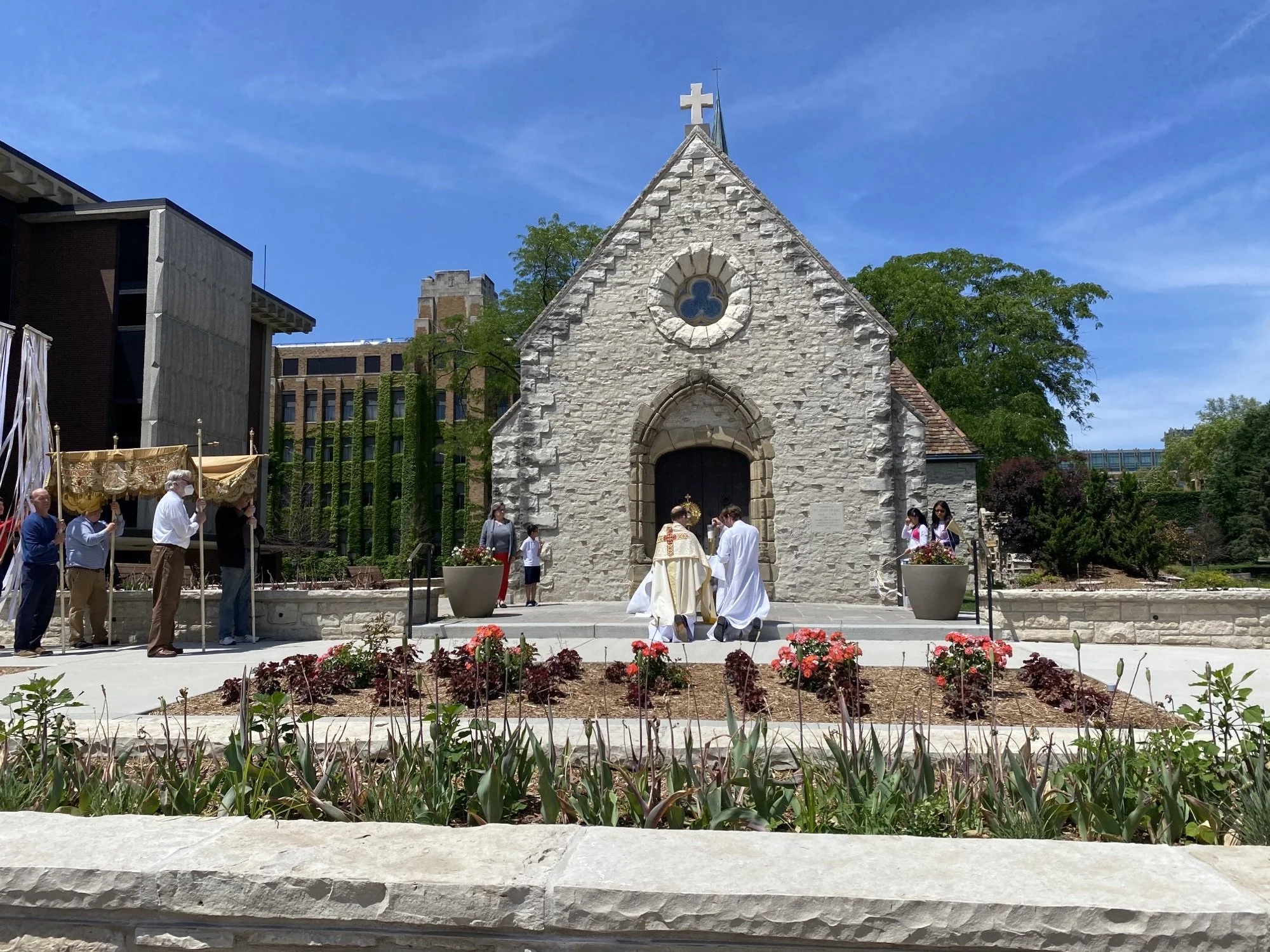
Feast of Corpus Christi, 2022. Procession to St Joan of Arc chapel, campus of Marquette University

"Mom?" "Son?" The Risen Jesus greets His Mother

Mary sees her Son with the cross. St Ignatius considers her meeting Him in glory.

Mary sees her Son with the cross. St Ignatius considers her meeting Him in glory.

“Mom?”

“Son?”

Jesus is Risen! Alleluia, truly He is Risen! This Easter we celebrate the glorious Resurrection of Christ from the dead.

And who knew Him better than anyone else? His Mother.

Who spend more time with Him than anyone else? Mary, His mother.

Who was the only one who was with Him from His conception and birth, throughout His entire life, and all the way to His suffering and death on the cross? Only Mary, our mother.

To whom did the Risen Jesus first appear, after His resurrection from the dead? Of course, Mary, His mother.

This is the obvious truth for St Ignatius Loyola, as recorded in the Spiritual Exercises: the Resurrected Jesus appeared first to His mother. Though not described in the New Testament, this was a popular devotion in Spain and parts of Europe throughout the middle ages. St Ignatius encourages us to contemplate Christ visiting His mother at her home. We might imagine the dialogue between the Blessed Mother and her Son.

“Mom?” “Son?”

Mary last saw her Son on Good Friday. His friends wrapped His broken Body in burial cloths and placed Him in the tomb. They rolled a stone across the tomb, completing His burial. Hours earlier, He had died on the cross. Bleeding and suffering for hours, He breathed His last as Mary gazed at Him through her tears. She saw Him die. She saw His lifeless Body taken down from the cross. She held Him many times as a boy. She holds him once more before His burial in the tomb.

He greets her early on Easter morning. “Mom?”

“Son? Is that you? Is it really you!”

He brings her joy in this glorious visit on Easter morning. She embraces Him again, weeping again, now smiling through tears of joy.

He has a Body-- a risen, glorious Body. His disciples do not recognize Him at first. He is different, mysterious. He can pass through locked doors and appear in different places that are miles apart in mere moments. It is only when He calls their names or shares the Eucharist with them that they realize: it’s Him, it’s really Him!

“Mom, yes, it’s Me. It’s really Me.”

The Risen Jesus brings us joy. He draws us out of desolation and into the consolation of His Resurrection. He literally went through hell and back for us. He comes to save us. Our God saw us sinking into sin and death and He pours out His life to save us. He holds nothing back, but gives us His life.

Jesus says to us, “Yes, it’s Me. It’s really Me.” He is the Alpha and Omega; Son of God and Son of Mary. He offers us to share in His joy and glory this Easter. He is Risen! Alleluia, truly He is Risen!

originally posted April 2017, http://www.whretreat.org/blog/2017/4/13/weekend-reflections-for-41417


This Lent: Fast and Feast

Forty days of prayer, fasting and almsgiving. Why do Christians do these spiritual practices during Lent?

“Because… Jesus told us to? To get ready for Easter? Because that’s what we do?” Yes, these practices are good. They teach discipline. Yes, Jesus did them. Further, they remove daily clutter to ‘open up a space’ for God. To pray means I must cut back on time spent on Disney+ and social media. Fasting cuts out favorite treats, as well as meat on Fridays; it helps me recognize my own dependence on God. I give alms to those in need; to do so, I forsake recreation like movies or ballgames.

—> audio version here; click ‘Jan 26:’

https://www.arisemke.org/copy-of-cor-jesu-2021 

We fast from unnecessary things to feast on what is essential. “One does not live by bread alone, but by every word that comes forth from the mouth of God,” as Jesus tells the devil in the desert [Matthew 5:4].

The Bible uses banquet imagery to describe true communion with God. “On this mountain the LORD of hosts will provide for all peoples a feast of rich food and choice wines, juicy, rich food and pure, choice wines” [Isaiah 25:6]. This is the joyful, overflowing bounty of grace poured out upon the just. Later, in Revelation we see, “Blessed are those who have been called to the wedding feast of the Lamb” [19:9]. 

How can we taste the heavenly feast even now? I’ll set the table with a seven-course spiritual banquet, plated graces for the season of Lent. Fast from the needless to feast on what’s needful. Try all seven this week and see what happens. 

Appetizer: spiritual reading. A good appetizer is small, juicy, and stirs our hunger for what is to come. I’d recommend short readings from the saints. The poems of St Therese of Lisieux. Sermons of St Augustine or the letters of St Ignatius. Many of these are short and pithy from feisty, faithful followers of Christ. Even a few lines can stir the mind and heart. Keep a book on your nightstand; begin and end your day with a taste of grace. 

teresa-of-lisieux/selected-poetry/ 

augustinus.html 

letters-of-ignatius-of-loyola/ 

Salad: spiritual direction. A salad is light, salty and tangy. It opens the palate for the main meal. A good spiritual director can help you to see how God has been at work in your life, and how God may be leading you. A good director is a good listener, who amplifies the spiritual movements in your own heart. A good pastor may bring these gifts; he knows and loves your tribe. A conversation every month or even annually can be immensely fruitful. It’s salt and light for your spiritual life.

Vegetable: reading the Bible. Some passages are savory, and practically a meal in themselves. The zesty flavor of St Paul’s letters or the simple goodness of the Psalms. We need the vitamins and minerals they provide, teaching us about God and about ourselves. Some chapters may taste like celery [Leviticus], yet still provide us with strength and grace. Ten minutes a day can make a difference to your digestion and your disposition, opening your eyes and strengthening your heart.

Grains: spiritual friendships. God did not intend us to follow him alone. God forms the Jewish people as a family. Jesus draws Christians around himself as friends. We need community, particularly a few good friends to share faith with. Some families may take time for prayer before dinner or at bedtime. Young singles may need to actively cultivate spiritual friendships on campus or at church; people you can pray with and speak with at a deeper level. It’s more fun to follow Jesus with friends; that’s why he called 12, not just one. We can live on this pasta for a long time, even if the other dishes fall away. 

Main course: worship. The New Testament speaks of Jesus as the Lamb of God. At the Last Supper, Jesus celebrates the Passover, as the apostles feast on roasted lamb, commemorating God liberating the Jews from slavery in the Exodus. The Catholics, the Eucharist is the “source and summit of Christian life” [Vatican II, SC 10]. Let me emphasize: in-person worship is far superior and far messier than zoom Mass. I need to really be there in the Body of Christ receiving the Body of Christ– with the crying babies, my pew-mate’s b.o., and the so-so sermon. Online, I can crop out the annoyances like a slick instagram post. Worship the Lamb offline.

Dessert: sabbath. Jesus took a day off each week. And He is the Savior of the world, but we're too busy to rest? Rest takes discipline. It means saying No to many things so I can say Yes to one thing, that is one Person [ok, Three Persons]. Jews take the sabbath on Saturday. For Christians, it’s Sunday. What if you ran errands another day, to keep the sabbath holy? Sabbath is a day for rest, prayer, and recreation with family and friends. Take a walk. Throw a ball with your kid, who is preferably not wearing a uniform. Pray. Stick a pizza in the oven, tear open a bag of salad, open a bottle of something and eat with someone you love.

After dinner drink: service. The Italians serve cappuccino and the Brits sherry. It settles the stomach, and raises you up for the next event– a game, dancing, or a movie. Christian faith feeds us for service and action. Reach out to someone in need. Homeless shelters and food pantries offer aid to the poor and wounded.  When you visit your grandma in her nursing home, spend a few minutes with her next-door neighbor, too. Serve for two hours weekly or monthly. Jesus says, “whatever you did for one of these least brothers of mine, you did for me” [Matthew 25:40]. God feeds us so that we may serve; service makes us hungry to return to the feast. 

Finally, my Catholic friends may ask: “where’s Mary?” She’s the hostess.

“Confession?” Go wash up before the meal.

“Journaling and rosary and…?” Pickles, olives, and pepper.

This Lent, fast so you can feast.    


Fr Joe Laramie SJ is the national director of the Pope's Prayer Network (Apostleship of Prayer) 

He is the author of Abide in the Heart of Christ: a 10-Day Personal Retreat with St Ignatius Loyola, based on the Spiritual Exercises [Ave Maria Press, 2019]

popesprayerusa.net @popesprayerusa

joelaramiesj.com @JoeLaramieSJ

Three quick tips for praying like St. Ignatius on his feast day

A cannonball blast cripples a young soldier. He falls to the ground in agony, his knee shattered along with his dreams of glory. In the weeks ahead, his leg heals. More dramatically, he picks up the pieces of his broken ambitions and God reorders them into something far more meaningful—a life lived Ad Majorem Dei Gloriam, “for the greater glory of God.”…

Full Text Here: https://www.americamagazine.org/faith/2021/07/30/three-quick-tips-praying-ignatius-feast-day-241145

Original post at American Magazine

Deadly crash on the Feast of the Assumption

The car flipped over 10 times. Maybe 15. I woke up to steel smashing against cement, over and over, over and over. Glass shattered and flew in my face and hair. The sun peeked out from the grey horizon—upside down, then right-side up. The car landed on its hood with a final, ugly crunch. I had my shoes off in the back seat…

full text here: https://www.americamagazine.org/faith/2019/08/15/deadly-crash-feast-assumption

originally posted at America Magazine

arnaud-steckle-dpzp54GkIGI-unsplash.jpg.png

A beautiful place to receive terrible news

I was in Mobile, AL with 11 SLU students over spring break. While there, we learned that all SLU classes would be moved online as the global pandemic shut down cities, states, and nations. It was a beautiful place to receive terrible news. 

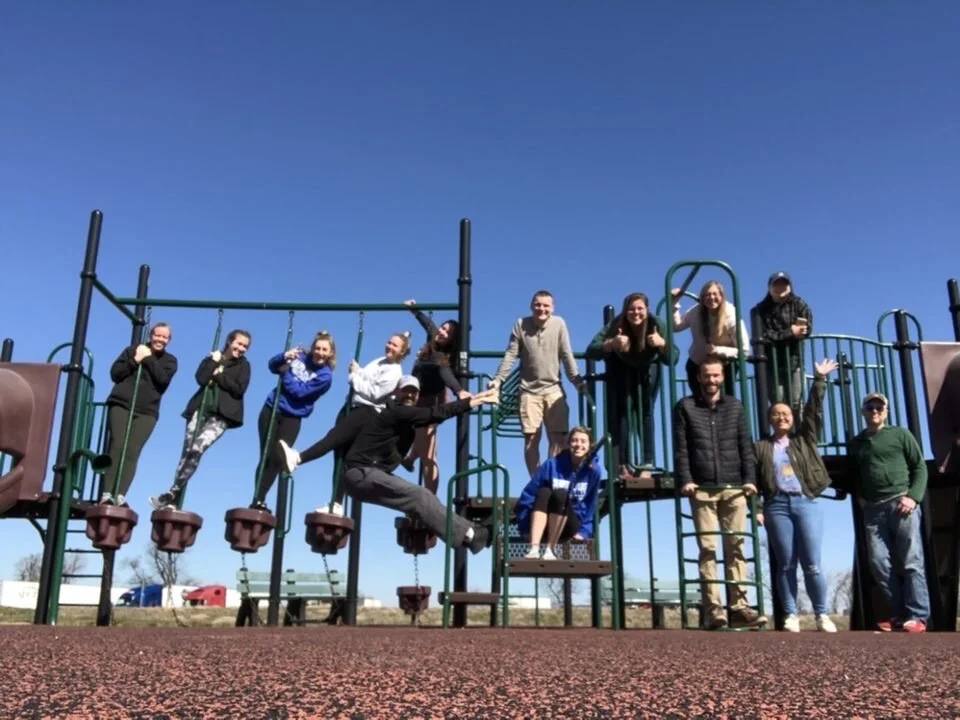
with SLU students, on a break in Mobile AL

with SLU students, on a break in Mobile AL

I was helping to lead a group of 11 SLU students on an immersion trip to a L’Arche community. L’Arche is a faith-based home for people with disabilities– physical, mental, and Down Syndrome. We had a great group. These kids are giving up their spring break to learn, grow, and serve. In the South, things move a little slower. We had an easy pace that included time for meals, prayere, games, and interacting with L’Arche members. On Tuesday evening, we got the first email from SLU. The corona virus was upgraded to a global pandemic by the WHO; all classes would now be online; and students needed to move out of their residence halls after spring break.

There were tears, hugs, anxious phone calls to parents, and frantic changes in travel plans.  

Amidst all of this there was an overwhelming feeling of grace. The L’Arche community in Mobile continued their day-to-day activities of meals, prayers, and art projects, as they planned ahead for this scary new reality. Our SLU group continued to listen, cook, clean, and learn. Our nightly reflections went deeper and longer as the week went on. Prayer and discussion provided a center of peace amidst the gathering storm of the pandemic.

It was a beautiful place to receive terrible news. My love and admiration for our students only increased over the week. These are bright, generous, caring young adults. They weren’t on vacation, but immersing themselves in a community of persons with disabilities. They set aside their break to learn, pray, and serve. In a time of crisis, our students reached out to support each other, their families, and L’Arche. We were all upset and confused. And, in faith, they moved outward in love. Not hoarding, but giving. Men and women for others, not for themselves. I’m grateful for the beauty of our students; they responded to terrible news with faith, hope, and love.

posted April 29, https://werememberslu.wordpress.com/2020/04/29/immersion-and-grace/

St. Ignatius, pizza and jokes: How I minister to college students

I am a campus minister at my alma mater, Saint Louis University, a Jesuit school. My time at S.L.U. helped me to develop a deeper, more mature relationship with Christ. I am trying to help college students do the same.

[originally published in America Magazine, March 3]

Toasting marshmallows and roasting each other after 9pm Mass outside Spring Hall at SLU, in Oct, 2019. L-R, Jack, Caroline, and Anna. Photo by Sean.

Toasting marshmallows and roasting each other after 9pm Mass outside Spring Hall at SLU, in Oct, 2019. L-R, Jack, Caroline, and Anna. Photo by Sean.

In 2000, I entered the Jesuit novitiate. I had many positive encounters with Jesuits at S.L.U. I took courses from older Jesuits on human nature and postmodern philosophy. I also worked with young Jesuits on retreats and service projects. At other times, we just chatted over lunch or coffee on campus. They were like big brothers to me: smart, fun and generous. I have stayed friends with many of these men; and now I am a Jesuit, too.

On a cool Wednesday night in October, I am hosting Taste of Ignatius. Over five weeks, I guide students through several meditations from the Spiritual Exercises of St. Ignatius Loyola. We look at the examen, gratitude and the “First Principle and Foundation.” Around 10 to 15 students show up on an average week. Some come once. Some never miss. There are freshmen and seniors, Catholic, Christian, other and “not sure.” A Hindu student brings a buddy…

[full article here: https://www.americamagazine.org/faith/2020/02/21/st-ignatius-pizza-and-jokes-how-i-minister-college-students]

"Listen to the Migrants' Cries:" Pope Francis' Prayer Intention for February

Knock knock

“Who’s there?”

This is a familiar format for a children’s riddle. You knock, I ask, you reply.

It’s based on a simple action– someone knocks on my door and I ask, “Who is it?”

Is this a stranger? A friend? A criminal? Who is knocking?

migrants.jpg

We’re right to be curious. And it’s ok to ask questions. But should we automatically be suspicious? What if this is a friend, or someone who needs my help?

This February, Pope Francis asks us to hear the cries of migrants. After all, we shouldn’t bolt the door until we know who is knocking, right? He writes, “Every stranger who knocks at our door is an opportunity for an encounter with Jesus Christ, who identifies with the welcomed and rejected strangers of every age” (Pope Francis, Message for the 2018 World Day of Migrants and Refugees).

After the birth of Jesus, Mary and Joseph fled to Egypt with their child. They escape from King Herod who searches for the child “to destroy him” [Matt 2:13]. After this danger passes, the Holy Family returns to their homeland. They were refugees only temporarily. Perhaps they knocked on an unfamiliar door seeking shelter. Imagine Joseph offering to work in exchange for food and housing. Knock knock. “Who’s there?

Modern migration is a complex issue. A humane response requires compassion, wisdom, and cooperation from citizens, churches, police, and government leaders. If we shut our ears and lock the doors of our hearts, then we will never hear the cries of the poor seeking protection and opportunity. Jesus says, “I was a stranger and you welcomed me.”

Who is knocking at our door? How will we respond?

A prayer— for migrants, and to open hearts to migrants:

Lord Jesus, you traveled a hard and lonely road with Mary and Joseph.
As a child, they carried you to a foreign land to escape the wrath of Herod.
Lord, may we see you present in the migrants and refugees who knock at the doors of our nation.
Open our ears to hear the cry of the poor, the weak, the weary and wounded, the children and newborns and tiny babies still in the womb!
Open our hearts! Give us hearts like Your Sacred Heart– large, and warm and welcoming.
Lord, even if we cannot welcome everyone, help us to welcome someone– even one child, one family in need.
Holy Family, help us to pray and work for justice and mercy in a broken world.
Amen.

originally posted here:

http://popesprayerusa.net/2020/01/27/february-reflection-fr-joseph-laramie-listen-migrants-cries/

http://popesprayerusa.net/2020/01/30/prayer-month-february-2020/

The Cathedral vs Planned Parenthood: a beautiful home vs an ugly prison

I love this Cathedral. I live and work at SLU, so I am close by. Sometimes I’ll stop in here for a few minutes while I am running errands, or going to the grocery store. I love to pray here in this Cathedral. It’s also fun to people watch here. You’ll see homeless guys coming in to sit, get some cool air. Also tourists-- a family from Iowa may be in town to see a Cardinals game. They wander in, all wearing red Cardinals shirts, and they are walking around looking up. They’re confused and amazed. They see saints, angels, colors, beauty, Jesus and Mary. When you walk into this church, your heart is lifted up by the glory of God. The foundation of this Cathedral is Christ; and here the Holy Spirit lifts our minds and hearts to praise the Father’s glory.

[homily, originally delivered Saturday, July 21, 2018 at monthly Pro-Life Mass, Cathedral Basilica, St Louis MO. A rosary prayer procession to Planned Parenthood followed Mass]

Cathedral Basilica, St Louis MO

Cathedral Basilica, St Louis MO

I’ll contrast this Cathedral with the place where we are all processing after Mass today-- Planned Parenthood. It’s not far away. I drive past that place regularly, too. That building is tall, painted, cement. I’m not sure what color it is-- beige? Faded gray? It looks like the skin of a really sick person. That building is designed to fade into the background. On a dark and rainy day, it just vanishes into the gray. The architect does not want you to notice it. He does not want you to think about what happens inside there. It is something very gruesome, very ugly. Abortions happen inside there. There are a few narrow windows at the very top. It’s like a fortress. I have never been inside there, but I can’t imagine it is a cheerful place to be. No natural light. Beige, painted cement.

It’s not a fair fight, it is? The Cathedral vs Planned Parenthood. That is a fortress built on a foundation of lies, of fear, of hopelessness. For all their talk about ‘choice’ and ‘freedom,’ they are basically telling women, “You have no choice. This is your only option. No one will help you. For a few hundred bucks in cash we can fix your problem. It’s just glob of cells anyway.” These are lies; they are evil lies. These lies prey on the fears of women who feel alone and afraid. That abortion brings death to her child. It’s the worst choice she’ll ever make.

pp.jpg

This Cathedral a place of truth, love, and light. Jesus is the way, the truth and the life. He gives us life. He came that we might have life. The eternal Son of God was born as a baby boy; He is the Son of Mary. She holds him, kisses Him, loves him, and shares Him with us. Jesus comes to us in the Eucharist at every Mass. He gives us His Body and Blood that we might have life and have it more abundantly.

We are here at the Cathedral in prayer this morning. We will walk to Planned Parenthood in prayerful, peaceful witness. We want to reach out to every woman who walks up to that ugly building. We love her. We are praying for her. We are here to help her. She might feel alone; she feels like she has no choice. Today, on that sidewalk, grandmothers will be praying together next to young girls; they want to hug this young woman in her time of need. I see many religious sisters here at Mass this morning. Thank you, Sisters, for your beautiful witness. Thank you for sharing your life and love. These Sisters are the spiritual mothers and spiritual sisters of the Church. They are here for this woman in her time of need. To love her and welcome her. We are here today to say, “We want to help. We can help you find resources, real options. Food, medical care, child care, adoption. You have options. We are here for you! We care! Don’t listen to those lies. You don’t have to choose abortion.” We pray that she doesn’t walk into that sickly gray fortress to make the worst choice she will ever make-- choosing abortion, the death of her child.

And even if she does, we still love her. We are still here for her. Jesus reaches out in love and mercy. There is no sin we can commit that God cannot forgive. Project Rachel and other organizations offer healing and reconciliation to women who have experienced the terrible act of abortion. So often these women feel pressured by boyfriends and even parents. In Project Rachel, the ministers are women. Many of these women have themselves been through the terrible tragedy of abortion; in Christ they find strength, renewal and forgiveness. Through Project Rachel they become apostles of Life, reaching out a healing hand to other women. Jesus is life; He comes to bring us mercy, to raise us up to new life in Him.

In the Gospel today, we hear the words, “Behold, my servant whom I have chosen, my beloved in whom I delight.” Jesus is the Beloved Son of the Father. Jesus fulfills what is written in Isaiah. “Behold, my beloved in whom I delight;” the Father speaks these words to Jesus at His Baptism and again at the Transfiguration. In Him, we, too, are beloved sons and daughters of the Father. Today, we say to these women that they, too, are beloved daughters-- their dignity is real, powerful, beautiful. Their tiny babies, their boys and girls, are beloved sons and daughters of the Father. God will help them; we will help them to choose life. The truth of Christ shines light into the darkness and uncovers the lies of abortion.

That big ugly fortress is built on a foundation of lies-- it is built on sand. The Holy Spirit is the glorious wind and mighty water that erodes and washes away that cheap and shoddy foundation. The Spirit works through our prayers and actions, our love, our peaceful witness-- until that awful prison collapses into under the weight of its lies and violence. The Holy Spirit works slowly and powerfully; the Spirit works through us, today. Choose life. Protect life. Defend life. Jesus is the way, the truth and the life.